





The UQDP-02TMB01-R000 is a quick-disconnect liquid-cooling connector increasingly specified on high-density rack and edge cooling BOMs; recent distributor sampling shows single-unit listings commonly range across low-double to mid-double-digit USD pricing with longer lead-times for specific terminations. This article consolidates verified technical fields, contrasts market pricing, and gives you a compact procurement and validation checklist.
Purpose: you will get a focused rundown of the UQDP-02TMB01-R000 technical checkpoints, a reproducible market pricing snapshot method, and an actionable RFQ/test playbook to avoid specification mismatches and unplanned cost. The piece references connector specs and market pricing practices without naming vendors, so you can apply the checklist directly to authorized distributor listings and manufacturer datasheets.
1 — Background: What the UQDP-02TMB01-R000 is and why it matters
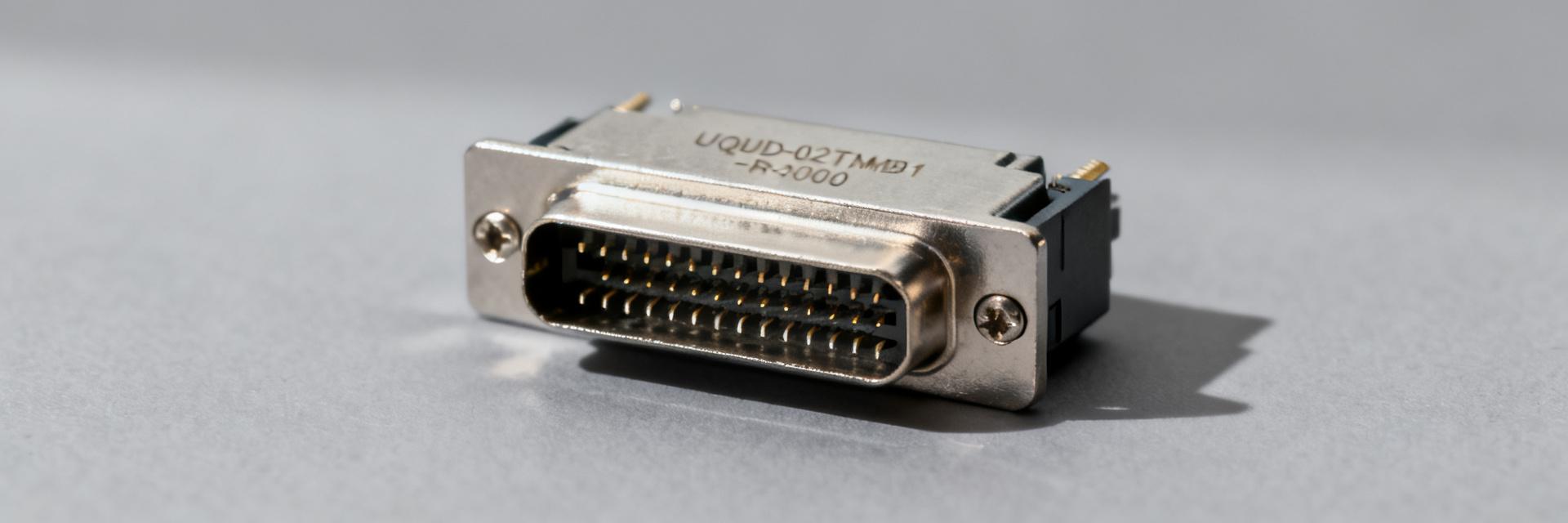
1.1 Form factor & intended applications
Point: The UQDP-02TMB01-R000 belongs to the quick-disconnect liquid-cooling family designed for blind-mate or threaded mating in data-center racks and edge compute thermal systems. Evidence: typical deployments put the plug on chassis or hose and the socket on distribution manifolds or cold plates. Explanation: when specifying, confirm which side is fixed, which is field-removable, and mounting footprint to ensure serviceability and routing clearances.
1.2 Standards & specification references to consult
Point: You should always cross-check the manufacturer datasheet, any applicable open-spec drafts, and distributor mechanical drawings. Evidence: look for documented spec versions and whether an OCP-style UQD draft or final spec is referenced. Explanation: note draft versus final status in RFQs; mismatched versions often cause dimensional or performance surprises during qualification or assembly.
2 — Current technical specs to verify for UQDP-02TMB01-R000 (connector specs)
2.1 Key mechanical and dimensional specs to document
Point: Collect precise external and mating dimensions, thread/termination type, insertion depth, O-ring groove geometry, and mating cycles. Evidence: acceptance requires drawing revisions and tolerances. Explanation: capturing these avoids field-fit issues—ensure the drawing revision on the datasheet matches the RFQ and that termination variants (BSP/metric/NPT) are explicitly called out.
| Field | Target data to collect |
|---|---|
| Nominal flow diameter | mm and inch |
| Mating diameter / insertion depth | ±0.1 mm tolerance |
| O-ring groove | cross-section, depth, recommended seal material |
| Mating cycles | documented cycle-life (e.g., 500–2000 cycles) |
2.2 Fluid, pressure, temperature, materials & durability parameters
Point: Verify max working and burst pressure, operating temperature range, compatible fluids, seal materials, and corrosion resistance. Evidence: spec fields should include leakage rates at pressure, cycle-life rating, and IP or ingress claims. Explanation: typical working pressures are in the 10–30 bar (150–435 psi) range for electronics cooling; ask for tested leakage in ml/min at rated pressure and validated cycle counts to reduce field failures.
3 — Market pricing benchmark for UQDP-02TMB01-R000 (market pricing)
3.1 Distributor price range & sample-data methodology
Point: Use a standardized price-sampling template: collect single-unit, 10/100/1000 breakpoints, currency and date, and lead time notes. Evidence: distributions vary; single-unit USD listings often land in the $12–$40 range, with 1000-unit pricing potentially under $8 each depending on termination and plating. Explanation: capture min/median/max prices and lead-time bands to drive negotiating thresholds.
3.2 Price drivers and negotiating levers
Point: Price is driven by material grade, plating, thread variant, certifications, MOQ, and lead time. Evidence: plated or specialty alloys and custom terminations add 10–50% to base unit price. Explanation: negotiate by qualifying equivalent terminations, consolidating to a preferred variant, leveraging volume tiers, or accepting spool/consignment stock to reduce unit cost and protect schedules.
4 — How to verify a listing and avoid spec mismatches (method/guide)
4.1 Procurement & engineering checklist
Point: RFQs should demand full datasheet and drawing revision, OCP or open-spec compliance statements when relevant, a sample for fit testing, and test reports for pressure/leakage. Evidence: include required documentation fields and tolerances in the PO. Explanation: require declared tolerances, seal material IDs, and an explicit mating partner part number to ensure what you receive matches what you qualify.
4.2 On-rack validation and lab tests before deployment
Point: Validate with pressure/leak tests, thermal cycling, vibration/shock, and particulate cleanliness checks. Evidence: establish pass/fail criteria like zero detectable leak at rated pressure for 10 minutes, and thermal soak across the operating range for 24 hours. Explanation: sample sizes of 3–5 units per lot are common for initial qualification; expand samples for critical systems.
5 — Practical case study: swapping to a UQDP-02TMB01-R000 equivalent in a cooling retrofit (case study)
5.1 Performance comparison vs. a legacy quick-disconnect
Point: Compare flow capacity, pressure rating, mating reliability, maintenance intervals, and footprint. Evidence: a modern UQ-style connector typically improves blind-mate reliability and sealing, reducing leak incidents per 1,000 connector-years. Explanation: report KPIs post-swap such as leak incidents, observed downtime change, and measured thermal delta to quantify retrofit value.
5.2 Cost & timeline impact analysis
Point: Model unit-price delta, validation costs, and procurement lead time into total project cost. Evidence: example approach: (unit-price × quantity) + qualification/testing fees + schedule contingency. Explanation: short projects may favor higher per-unit cost to avoid long lead times; larger programs should amortize validation costs over higher volumes for net savings.
6 — Actionable purchasing & deployment playbook (recommendations)
6.1 Short-term purchasing checklist (single project buys)
Point: For immediate buys, confirm exact part/variant, request latest datasheet and drawing, order samples, include test acceptance in PO, and track lead time. Evidence: require documented sealing material and declared cycle life. Explanation: adding a simple fit-test clause and return-to-vendor sample option in the PO reduces risk on first builds.
6.2 Long-term sourcing & inventory strategy
Point: For long-term programs, qualify multiple authorized suppliers, set safety stock, and identify alternate part numbers. Evidence: include obsolescence clauses and requalification triggers for drawing revisions. Explanation: diversifying suppliers and maintaining 2–3 months safety stock mitigates single-source and lead-time shocks.
Summary
Recap: you now have the essential technical fields to confirm for the UQDP-02TMB01-R000, a reproducible market pricing snapshot method, and a compact procurement/validation playbook to reduce field risk. Pair datasheet verification with sampling-led pricing snapshots before purchase to keep schedules and costs predictable.
- Confirm mechanical and mating dimensions and O-ring groove details; these connector specs determine interchangeability and fit—document drawing revision and tolerances for each RFQ.
- Verify pressure, temperature, compatible fluids, and cycle-life test data to prevent in-service leakage and corrosion; require leak-rate and cycle-test reports in acceptance criteria.
- Use a price-sampling template (min/median/max, 1/10/100/1000 breaks, lead time) to benchmark market pricing and identify negotiation levers like volume, termination standardization, and consignment.
FAQ
What key connector specs should I require when evaluating UQDP-02TMB01-R000?
Require the full drawing revision, nominal flow and mating diameters, O-ring groove dimensions, declared seal material, rated working/burst pressure, operating temperature, validated cycle life, and a leakage test report. These items prevent dimensional mismatches and field failures during installation and operation.
How should I capture market pricing for the UQDP-02TMB01-R000 to inform procurement?
Collect single-unit and volume-break prices (1/10/100/1000), currency and collection date, and lead-time bands. Report min/median/max and note whether pricing is for specific terminations or plating. Use that snapshot to set target negotiation thresholds and approve substitutions.
What on-rack tests are essential before full deployment of UQDP-02TMB01-R000 connectors?
Run a pressure/leak test at rated pressure, thermal cycling across the intended range, vibration/shock if rack transport is expected, and cleanliness/particulate checks for coolant systems. Define pass/fail acceptance (e.g., zero detectable leak for 10 minutes) and qualify a sample batch before mass installation.
How does the UQDP-02TMB01-R000 handle fluid compatibility and high pressure?
The connector features precision elastomeric seals and O-rings compatible with standard cooling fluids, rated for normal working pressures of 10 to 30 bar (150 to 435 psi) in electronic cooling systems, and ensures zero leakage under rated pressure.


