





This spec brief condenses measured and rated performance for the UQDLS-02HSH01-R000 quick disconnect, focusing on flow rate behavior and pressure rating limits to help engineers evaluate suitability for liquid-cooling loops and fluid-transfer systems. The intent is a compact, data-driven snapshot that highlights datasheet values and bench-test guidance for rapid technical decisions.
The article delivers an at-a-glance spec summary, practical testing and measurement guidance, an integration checklist, and a procurement-ready spec block so readers leave with a clear acceptance-test protocol and copy/paste BOM entry. Engineers will be able to size pumps, verify pressure margins, and create QA acceptance criteria from this brief.
Product Overview & Key Specs (background)
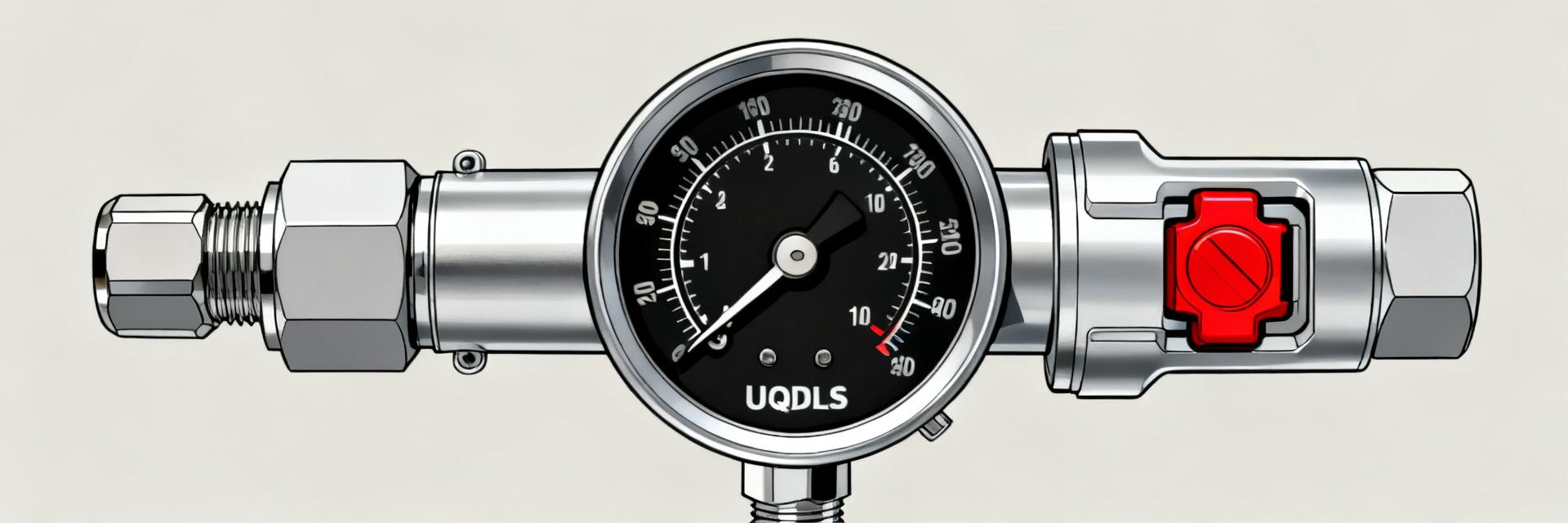
Quick specs at a glance
Point: Nominal reference values are summarized so procurement and test teams have a quick card to use. Evidence: typical datasheet entries include nominal connection type 1/4" hose barb, nominal size UQD02-class, typical flow rate in L/min or GPM, max working pressure in psi/bar, burst pressure, recommended temperature range, body stainless steel and listed o-ring materials. Explanation: use datasheet numbers where available and flag measured bench values separately when quoting expected system performance.
- Connection: 1/4" hose barb (nominal)
- Nominal size: UQD02-class
- Typical flow rate: specify L/min or GPM per test
- Rated working pressure: specify psi / bar (datasheet)
- Burst pressure: specify psi / bar (datasheet)
- Operating temp: specify range (°F/°C)
- Body: stainless steel; Seals: EPDM/FKM options
- Nominal ID: specify mm/inch from datasheet or measured bore
Intended applications and expected performance envelope
Point: The connector targets liquid-cooling, thermal-control manifolds and serviceable quick-disconnect functions. Evidence: common use-cases include cold-plate cooling loops, rack-level coolant distribution and maintenance staging. Explanation: expect reliable intermittent reconnects, compatibility with water/glycol mixes, moderate duty cycles; for continuous, high-circulation duty evaluate wear on seals and choose higher-flow variants for lower ΔP at system flow rates.
Flow Rate Details & Testing Protocols (data analysis)
Measured flow rate vs pressure drop
Point: Present flow as flow rate versus differential pressure to allow pump sizing. Evidence: use tables or curves showing L/min (or GPM) at standard inlet pressures (psi/bar) and ΔP steps; include Cv/Kv if available from lab tests. Explanation: flag measured bench numbers vs rated datasheet values and note repeatability, measurement uncertainty, and fluid viscosity used during tests.
| Test ΔP | Flow (L/min) | Flow (GPM) |
|---|---|---|
| 1 psi (0.07 bar) | — | — |
| 5 psi (0.34 bar) | — | — |
| 20 psi (1.38 bar) | — | — |
Interpreting flow data for system design
Point: Use flow curves to size pumps and compute head loss across the connector. Evidence: sample calculation approach—determine pump head, subtract tubing and component losses, read expected flow at resultant ΔP from connector curve. Explanation: include margin for fouling and transient events, and account for cavitation risk when inlet pressure approaches vapor pressure; low inlet pressure reduces effective flow rate and can produce vapor locking.
Pressure Rating, Safety Limits & Burst Behavior (data analysis)
Max working pressure vs burst pressure and safety factors
Point: Define safe working limits using conservative safety factors. Evidence: recommend design working pressure ≤ one-quarter to one-third of burst pressure as a guideline; verify with hydrostatic hold and ramp tests. Explanation: document test method, acceptance leak rate and duration; record pass/fail thresholds in QA documentation to ensure consistent procurement evaluation.
Effects of temperature, seals and fluids on pressure rating
Point: Temperature and seal chemistry materially affect pressure capability. Evidence: common elastomers (EPDM, FKM) lose tensile and sealing properties at elevated temperatures and certain fluids. Explanation: choose seal material compatible with the coolant chemistry and expected operating temperature, and reduce allowable working pressure if seal ratings or chemical incompatibility indicate degradation risk over time.
Installation, Maintenance & Troubleshooting (methods)
Correct installation steps to preserve flow and pressure performance
Point: Proper assembly preserves flow and prevents leaks. Evidence: recommended steps—cut and deburr hose square, confirm barb insertion depth, use correct clamp type and torque, inspect o-ring seat and mating face. Explanation: orientation to avoid kinks, preserve nominal ID, and maintain straight runs near the connector minimize added ΔP and ensure predictable flow rate behavior in installed systems.
Troubleshooting common flow/pressure issues
Point: Rapidly diagnose common symptoms to restore performance. Evidence: pressure drop can indicate clogging, undersized hose, or partial engagement; intermittent leaks point to seal damage or debris. Explanation: recommended diagnostics include pressure-hold tests, flow verification with a calibrated meter, and dye or bubble tests for leak localization before replacing parts.
Comparative Use Cases & Compatibility Checklist (case)
Side-by-side spec comparison fields to evaluate alternatives
Point: Use consistent metrics to compare alternatives. Evidence: key fields—nominal ID, rated flow at standard ΔP, max working pressure, burst pressure, leak rate on disconnection, materials, operating temp and interchangeability standards. Explanation: prioritize flow at target ΔP for cooling loops, and prioritize burst and leak behavior for high-pressure transfer scenarios when selecting alternatives.
System compatibility checklist for procurement/integration
Point: A checklist prevents integration surprises. Evidence: include hose ID/OD match, clamp type, coolant viscosity, peak pressure events, tolerance for brief disconnect fluid loss, required certifications and test reports. Explanation: add a field to record measured flow rate and pressure test results after install to close the procurement loop and validate as-installed performance.
Specification Summary Table & Actionable Specs for Purchasing (action)
Procurement-ready spec block (copy/paste)
Point: Provide an unambiguous spec block for BOMs and POs. Evidence: include fields below exactly; replace placeholders with datasheet or measured values before issuing orders. Explanation: using a clear spec block avoids procurement ambiguity and ensures suppliers return matched test reports and materials certification.
Part number: UQDLS-02HSH01-R000
Connection type: 1/4" hose barb (nominal)
Nominal flow rate: [__] L/min ([__] GPM) at [__] psi ΔP
Rated working pressure: [__] psi / [__] bar
Burst pressure: [__] psi / [__] bar
Operating temp: [__] °F ([__] °C)
Body material: stainless steel
Seal material: [EPDM/FKM] (specify)
Acceptable fluids: water, water-glycol mixes (confirm compatibility)
Test acceptance: Hydrostatic [__] psi hold for [__] min; max leak rate [__] mL/min
Final QA & acceptance test checklist
Point: Define pre-shipment and on-site checks to accept product. Evidence: pre-shipment: material certificates, dimensional inspection, visual and functional coupling tests; on-site: pressure-hold, flow verification at operating condition and disconnect leak test. Explanation: include signoff fields for test operator, date, and measured values to document acceptance and field traceability.
Summary
- Compact evaluation: check nominal internal diameter, measured flow rate at target ΔP, and rated working pressure against system peak events to confirm compatibility and margin.
- Testing guidance: implement hydrostatic hold, ramp and flow verification with calibrated fluids and record repeatability to quantify real-world performance under expected coolant viscosities.
- Installation & QA: follow hose prep and clamp torque checklist, perform on-site pressure-hold and disconnect leak tests, and record measured flow rate and leak metrics for procurement acceptance.
Frequently Asked Questions
How does UQDLS-02HSH01-R000 affect measured flow rate in a 1/4" loop?
Point: Expect connector ΔP to add to total loop losses. Evidence: bench curves or a short test run at expected pump head quantify the connector-specific loss. Explanation: estimate expected flow by subtracting tubing and component head from pump head, then read flow from the connector curve; validate with a controlled flow test before final tuning.
What is the recommended pressure test for verifying UQDLS-02HSH01-R000 working pressure?
Point: A hydrostatic hold test is standard. Evidence: perform a hydrostatic hold at the specified test pressure (datasheet value or nominated acceptance pressure) for a defined duration and check leak rate acceptance. Explanation: document ramp procedures, hold duration and acceptable leak thresholds to make pass/fail decisions consistent across lots and sites.
Which seal materials should be selected to maintain pressure rating with glycol mixes for UQDLS-02HSH01-R000?
Point: Seal compatibility preserves pressure and leak performance. Evidence: EPDM often tolerates glycols well; FKM may be needed for certain additives or higher temperatures. Explanation: verify chemical compatibility with the chosen coolant and reduce allowable working pressure if seal ratings are marginal to avoid premature leakage or loss of burst margin.
What installation steps prevent flow restriction in the UQDLS-02HSH01-R000?
Point: Proper tube assembly preserves nominal inside diameter and fluid flow. Evidence: follow critical integration steps—deburr hose square, insert fully to the barb shoulder, and clamp with uniform radial force. Explanation: avoiding tube-end deformities and keeping structural bends isolated from coupling connections prevents local turbulences and downstream pressure drops.


