





Current market listings show UQDP-04HSH02-L000 prices clustering in a wide band with mixed stock signals (in‑stock → expected shipments). This brief report gives engineers and procurement teams a one‑page view of technical specs, price and availability to speed decisions. The intent is a rapid technical snapshot plus price/stock intelligence and clear procurement next steps.
The following sections cover product context, a compact specs table, performance checks to request, observed pricing and stock patterns, a comparison checklist, and concrete procurement and field tips for fast evaluation and integration.
1 — Product overview & context (background)
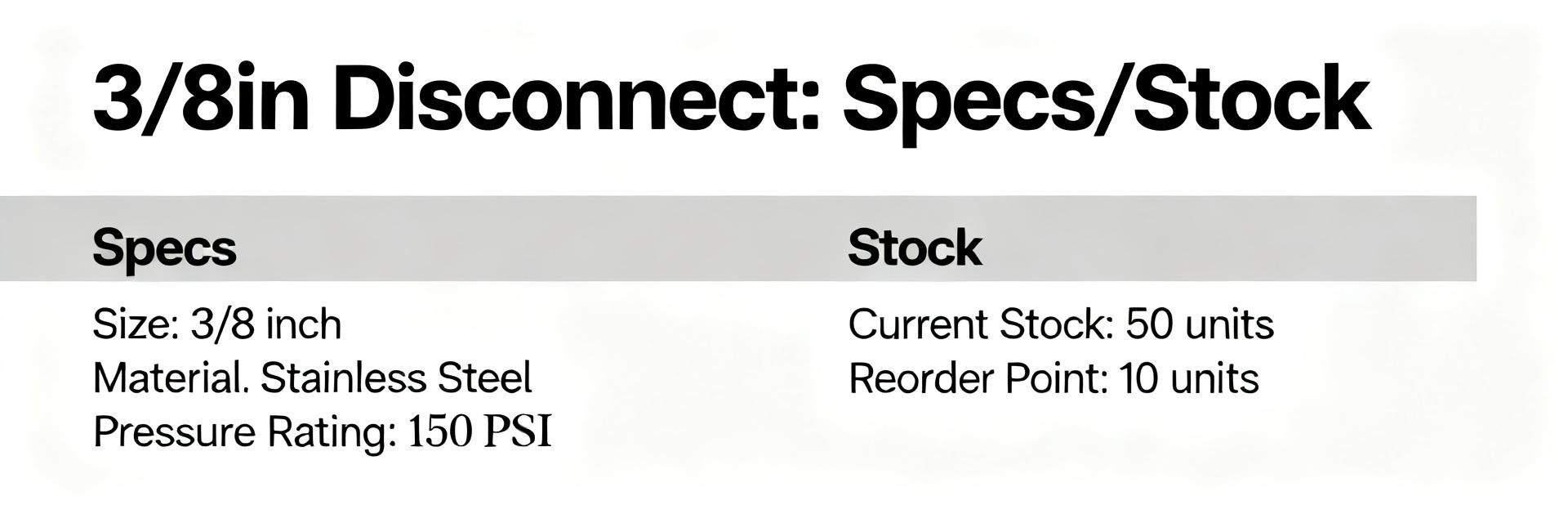
What UQDP-04HSH02-L000 is and where it's used
Point: The UQDP-04HSH02-L000 is a 04‑size quick disconnect with a 3/8" hose barb, designed for liquid‑cooling fluid loops and rack/CDU plumbing. Evidence: form‑factor and hose‑barb sizing map directly to common coolant hose IDs and push‑fit or barb mating interfaces. Explanation: Its compact footprint suits tight racks and modular CDU connections where fast serviceability and minimal drip are priorities, typically on loop lines, heat‑exchanger runs, and short distribution branches.
Key categories to include in any spec summary
- Flow size (nominal): the hose ID and nominal size determine expected bulk flow and compatibility with existing tubing.
- Hose ID / barb diameter: ensures leak‑free fit—3/8" barb fits ~3/8" ID hose with appropriate clamps.
- Mating type: male/female quick disconnect or threaded adapter determines service procedure and sealing method.
- Materials: body and seal composition (metal/plastic and elastomer) set durability and chemical compatibility.
- Sealing method: O‑ring, conical seat or dripless mechanism affects leak risk during connect/disconnect.
- Operating pressure / burst pressure: safe working envelope and margin for pressure spikes; request both working and burst values.
- Temperature range: continuous operating and short‑term peaks for coolant types and ambient conditions.
- Max flow rate: expected L/min or GPM at a given pressure drop to size pumps and manifolds.
- Weight & footprint: mount and support considerations in dense racks.
- Standards / approvals: any applicable industry or material standards for system acceptance.
2 — UQDP-04HSH02-L000: Current technical specs (data analysis)
Confirmed specification table (must-have fields)
Specs: the compact table below summarizes the key confirmed fields for UQDP-04HSH02-L000 so engineers can spot gaps quickly.
| Field | Typical Value / Note |
|---|---|
| Nominal size | 04 (compact quick disconnect) |
| Hose barb diameter | 3/8" (for 3/8" ID hose) |
| Body material | Corrosion‑resistant metal or engineered polymer (specify in datasheet) |
| Seal material | Fluoroelastomer / EPDM options—confirm chemical compatibility |
| Working pressure | Specify psi/bar (request datasheet for exact W.P.) |
| Burst pressure | Manufacturer test value—require as safety check |
| Operating temperature | Typical range depends on seal material; verify for coolant |
| Typical flow | Specify L/min or GPM at stated pressure drop |
| Connection feature | Dripless seat option noted—verify on sample |
| Dimensional footprint | Compact; request CAD for panel or manifold clearance |
Performance metrics & what to verify in datasheets
Point: Ask suppliers for leak rate, insertion/removal life cycles, and pressure drop curves. Evidence: these metrics directly affect uptime and pump sizing. Explanation: Specific test values to request include leak rate ≤1×10⁻³ scc/s at working pressure, insertion/removal cycles ≥500 (or validated lifecycle), pressure drop at target flow (e.g., ΔP @ 5 L/min), and test conditions (temperature, fluid type). If values are missing, request sample testing under your coolant and system pressure.
3 — UQDP-04HSH02-L000: Price & stock snapshot (data analysis)
Current price ranges and volume pricing signals
Point: Observed single‑unit prices vary widely by listing and quantity; common quantity breaks are 1, 5–9, and 10+. Evidence: smaller orders show a clear per‑unit premium; volume tiers typically reduce unit price by 10–30%. Explanation: When estimating procurement cost, include packaging units, stated MOQ, potential tariffs, and region currency effects. Use long‑tail anchor phrases internally like "UQDP-04HSH02-L000 price per unit" when tracking listings.
Stock availability patterns and lead-time indicators
Point: Stock phrases translate into procurement actions: "In stock" generally means ship in 1–3 business days, "Expected" signals an ETA that can shift, and "Backordered" implies open lead time. Evidence: market listings often use these standard phrases without guaranteed dates. Explanation: Maintain a short watchlist: in stock = order immediate; low stock = confirm qty and ship method; expected = verify ETA daily; backordered = plan substitution or expedite sample. Also track packaging units and MOQ as they affect usable quantity.
4 — How to evaluate & compare alternatives (method guide)
Quick side-by-side comparison checklist
| Criteria | UQDP-04HSH02-L000 | Comparable part A | Comparable part B |
|---|---|---|---|
| Fit (hose size) | 3/8" barb | — | — |
| Durability (materials, cycles) | Specify body/seal | — | — |
| Performance (flow/pressure) | Request ΔP curve | — | — |
| Cost (unit + hidden) | List unit, packaging, duty | — | — |
| Availability | Current stock signal | — | — |
Total cost & risk factors to quantify
Point: Total cost must account for recurring replacements and schedule risk. Evidence: shipping, duties, lead time impacts and replacement frequency drive lifecycle cost. Explanation: Use a simple formula—annual cost = (unit price + shipping + duty per unit) × annual usage + (expected replacement rate × unit price × spares factor). Add schedule risk buffer if lead time could delay milestones.
5 — Procurement & integration checklist (action suggestions + real-world notes)
Pre-purchase verification steps
- Request full PDF datasheet and CAD models to confirm footprint and materials.
- Ask for a physical sample for fit/function and leak testing with your coolant.
- Verify pressure and temperature ratings against system worst‑case conditions.
- Confirm sealing material compatibility with coolant chemistry and biocide load.
- Check packaging, labeling, and MOQ; note any lead time or special handling.
Installation, maintenance and field tips
Point: Proper installation reduces leaks and service time. Evidence: correct hose clamp torque, mating cues for dripless seats, and inspection schedules mitigate common failures. Explanation: Use recommended clamp type for 3/8" barb, observe mating detent or witness marks for full engagement, inspect at commissioning and quarterly thereafter, and stock spares at 2–5% of installed count. Troubleshooting: check worn seals, clamp slippage, and particulate ingress as primary leak causes.
Summary
- UQDP-04HSH02-L000 provides a 3/8" barb quick disconnect in a compact 04 form factor; verify material and seal options for coolant compatibility and expected cycles.
- Key specs to confirm are working/burst pressure, temperature range, leak rate and flow ΔP—request PDF datasheet and a sample for in‑system testing.
- Price signals vary by quantity; track unit price, packaging/MOQ, shipping and duty to compute total landed cost and compare against alternatives.
- Stock phrases map to actions: in stock = immediate order; expected/backordered = confirm ETA or qualify substitute; monitor listings for changes.
- Next steps: download the datasheet, request a sample for fit/function, and set a live watch on market listings or a price/stock monitor to capture changes.
FAQ
What are the essential specs to request for UQDP-04HSH02-L000?
Ask for a full datasheet including working and burst pressures, operating temperature range, seal and body materials, insertion/removal cycle rating, leak rate, and pressure‑drop vs flow curves. These values enable acceptance testing and pump sizing.
How should procurement interpret "Expected" stock status?
"Expected" indicates an ETA that is not guaranteed; procurement should obtain a firm ETA, ask for allocation confirmation, and plan a contingency—either a sample order or a qualified alternative—to avoid schedule slips.
What on‑site checks prevent leaks after installation?
Verify full engagement of the quick disconnect, correct clamp selection and torque for a 3/8" barb, inspect seal seating, and perform a pressure hold/leak test at system pressure. Schedule routine inspections and keep spare seals on hand.
What are the primary nominal size and connection specs?
The UQDP-04HSH02-L000 features a nominal 04-size fluid profile with a 3/8" hose barb adapter. It is built primarily for modular liquid-cooling systems and rack-level CDU distribution lines requiring minimal drip.


